
Lead Database Meaning and How to Choose the Right One for B2B Sales
Learn what a lead database means, how to evaluate B2B data quality fast, and how to shortlist providers with a practical scorecard.
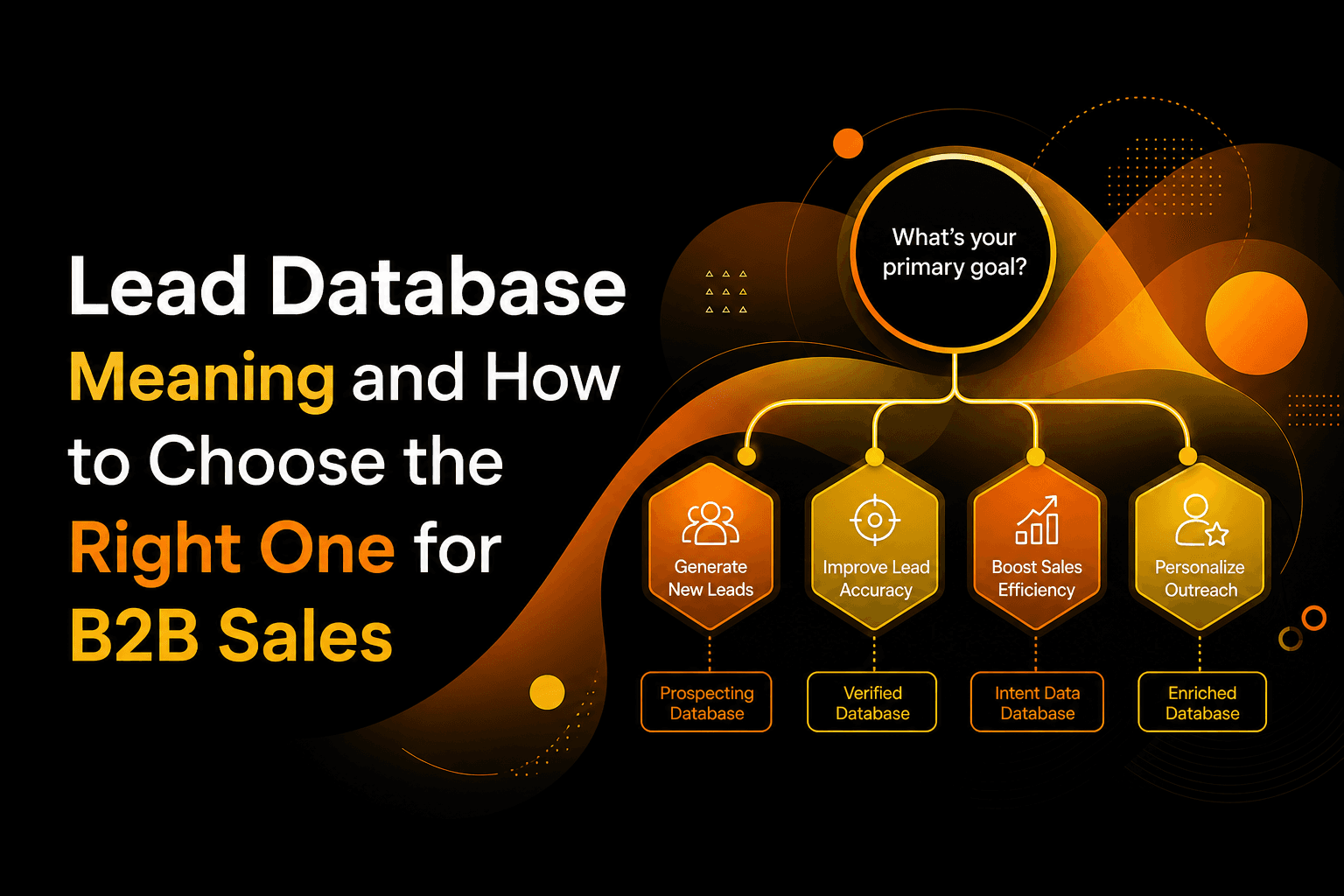
If you searched for a lead database, you might mean one of two very different things: a database of B2B prospects for sales outreach, or government and property records related to lead paint. Picking the wrong path wastes time and can create compliance risk. This guide gives you a buyer-ready framework to define intent, test data quality in under an hour, and shortlist a provider based on measurable outbound performance.
- Disambiguate “lead database” intent in 60 seconds using a two-path decision tree so you evaluate the right dataset and vendors.
- Audit a B2B lead database with a repeatable sampling test: bounce rate, refresh cadence, match rate, and enrichment completeness.
- Use a compliance checklist and a scorecard rubric to shortlist providers based on coverage, verification, integrations, and total cost drivers.
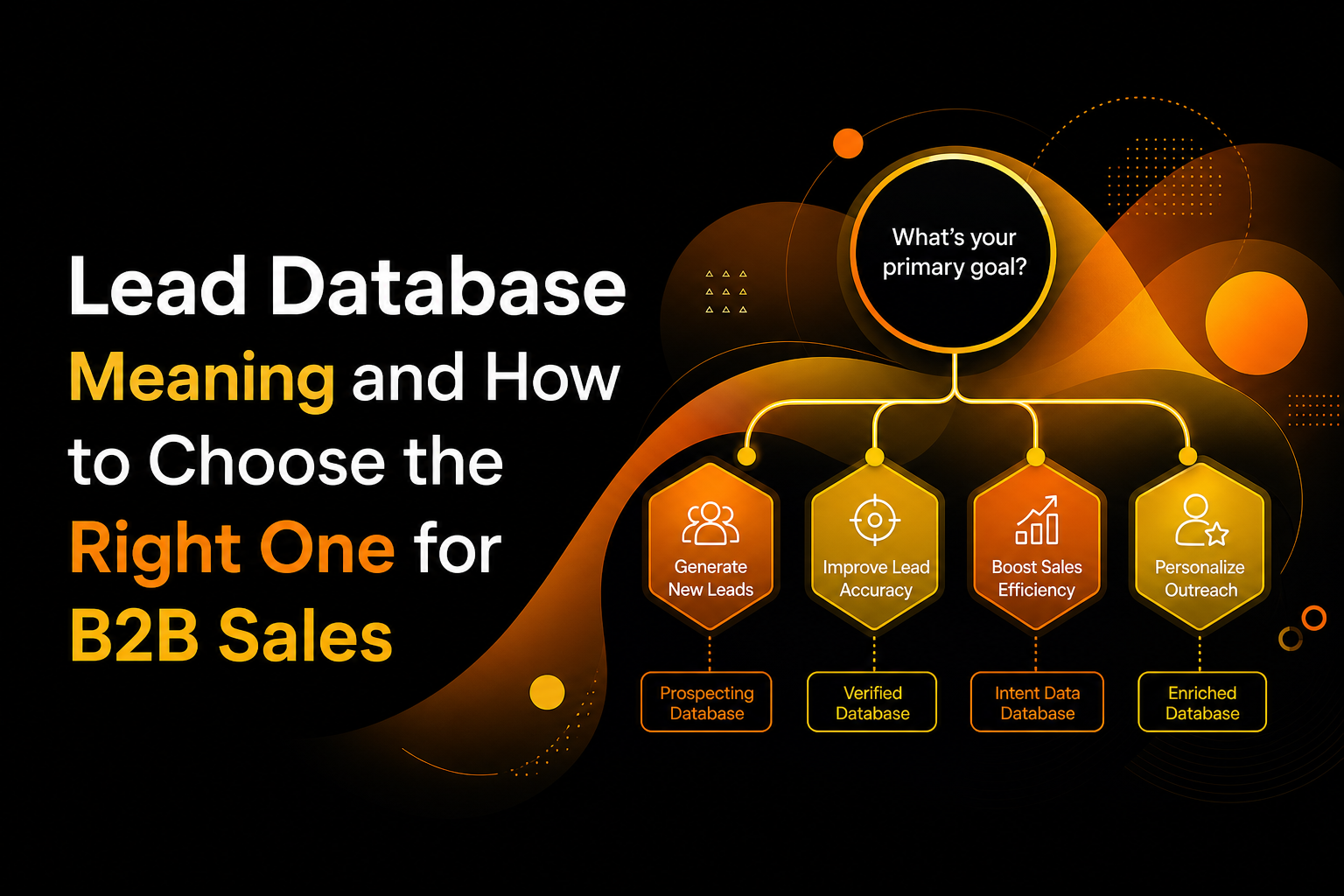
Which lead database do you mean, B2B prospects or lead paint records
A 2-path decision tree to disambiguate intent fast
- If your goal is meetings, pipeline, or outbound email: you need a B2B lead database of companies and contacts (names, roles, verified emails, firmographics).
- If your goal is property risk, renovation, tenant disclosure, or public health: you likely need government or property records related to lead paint, housing age, inspections, or remediation.
What each database is used for and what “good” looks like
| Database type | Typical user | Primary use | Quality indicators | Common pitfalls |
|---|---|---|---|---|
| B2B prospects | Sales, founders, SDRs, growth teams | Build target lists and run outbound campaigns | Low bounce, recent updates, accurate titles, strong filters | Stale emails, missing direct dials, weak coverage in specific regions or industries |
| Lead paint / property records | Homeowners, landlords, contractors, compliance teams | Disclosure, permitting, risk checks, remediation planning | Official source, clear jurisdiction, documented update cadence | Fragmented across agencies, outdated records, confusing terminology |
If you actually meant lead paint or property records
Start with your local jurisdiction and national guidance. In the US, the EPA explains lead rules and resources for homes and renovation at EPA Lead. For disclosure and housing-related requirements, HUD maintains lead information and programs at HUD Lead-Based Paint Disclosure. If your goal is sales outreach, continue below.
What a B2B lead database must contain to be useful in 2026
Required fields for outbound workflows (not a glossary)
A lead database is only useful if it supports the steps you actually run: list building, segmentation, personalization, sending, and CRM handoff. Use this minimum data model as your baseline.
- Contact identity: first name, last name, current title, seniority, department, LinkedIn URL.
- Company identity: company name, website domain, HQ location, employee range, industry/category.
- Outbound-ready email: email address plus metadata (verification status, last verified date, catch-all flag if available).
- Segmentation filters: role and seniority, geography, company size, industry, and at least 5 to 10 advanced filters relevant to your ICP (examples below).
- Governance basics: source transparency, refresh cadence, suppression support (do-not-contact), and export/audit logs.
Filters that map directly to better targeting
In practice, you will get more replies by combining firmographic fit with timely triggers. Look for filters that let you build lists like “right buyer, right time,” not just “anyone with a title.”
- Tech stack (for integrations, migration offers, security tools)
- Funding stage or recent funding events
- Hiring signals (job openings for related roles)
- Job changes (new VP, new Head of RevOps)
- Keywords from public profiles or company descriptions
Data governance checks you can ask in one email
- How often are contact emails re-verified, and what triggers a refresh?
- Do you store “last seen” or “last verified” timestamps per record?
- Can we suppress contacts and have that suppression persist across future exports?
- Do you provide documentation of data sources and processing activities (for compliance review)?
How to evaluate lead database quality in 60 minutes
The 60-minute sampling audit (step-by-step)
Most teams buy a lead database based on coverage claims, then discover the cost in bounces, spam complaints, and wasted rep time. Instead, run a sampling audit that produces comparable metrics across vendors.
- Define a tight ICP slice (10 minutes). Example: “US and UK, 11 to 200 employees, SaaS, titles: Founder/CEO/VP Sales.”
- Export a sample (10 minutes). Pull 200 contacts from that slice. If the tool limits exports, take the maximum you can and document it.
- Check completeness (10 minutes). Count missing fields: title, LinkedIn URL, company domain, location. Track “% complete” per field.
- Validate email risk (15 minutes). Use the vendor’s verification metadata if available and spot-check with your own verifier or internal process.
- Estimate match rate to your CRM (15 minutes). Upload the company domains (not emails) to your CRM to see overlap and duplicates.
Benchmarks to use when comparing vendors
Exact numbers vary by segment, but you need thresholds to make decisions. Use these as practical guardrails for outbound email.
- Bounce rate target: aim for < 2% on cold email sends; investigate anything consistently above that. If you need terminology clarity, see bounce rate definition.
- Field completeness: for your must-have fields, target 90%+ filled in your sample (titles and company domains especially).
- Recency: require a “last verified” or “last updated” signal. If a provider cannot explain refresh cadence per record, treat it as a risk.
- Duplicate rate: if > 10% of your sample collides with existing CRM records without clear identifiers, expect ops overhead.
A simple scoring worksheet you can copy
| Metric | How to measure in a 200-lead sample | Pass threshold | Your result |
|---|---|---|---|
| Email risk | % marked verified and not catch-all (or equivalent) | > 90% low-risk | ___ |
| Completeness | % with title + company domain + location | > 90% | ___ |
| Recency | % with last verified/updated date within 90 days | > 70% | ___ |
| CRM match rate | % of company domains already in CRM (dedupe workload) | Context-dependent | ___ |
Compliance checklist, is lead generation illegal and how to stay safe
What “legal” really means for a B2B lead database
Lead generation is not “illegal” as a category, but your lead database and outreach must align with privacy and anti-spam rules in the markets you target. Most risk comes from poor record-keeping, weak opt-out handling, and sending to unverified addresses that harm your reputation and trigger complaints.
Practical checklist for GDPR, CAN-SPAM, CASL, and CCPA
- GDPR (EU/UK): document your lawful basis (often “legitimate interests” for B2B), keep a balancing test, and provide clear opt-out. Maintain a suppression list and honor it across tools.
- CAN-SPAM (US): accurate headers, non-deceptive subject lines, clear identification, a physical address, and a working opt-out mechanism honored promptly.
- CASL (Canada): higher bar for consent in many cases. If you target Canada, get specific legal guidance and be conservative with list sources.
- CCPA/CPRA (California): be prepared to respond to access and deletion requests, and understand whether your vendor is a “service provider” or “third party.”
Vendor due diligence questions (send these before you buy)
- What are your data sources, and do you have a documented data processing agreement?
- How do you verify emails and how often is verification repeated?
- Do you support suppression lists and do-not-contact flags across future refreshes?
- Can you provide audit logs of exports and user access?
- How do you handle data subject requests (access, deletion, correction)?
Deliverability is part of compliance in practice
Even if your legal basis is sound, sending patterns that generate bounces and complaints can get you blocked. Treat email deliverability as a control system: verify before sending, throttle volumes, and stop sequences when negative signals spike.
Comparison scorecard to shortlist lead database providers
The shortlist rubric (weighted for outbound performance)
Use a scorecard so your decision is driven by measurable outcomes, not “number of contacts.” This is the fastest way to choose the right lead database for your segment.
| Category | What to test | Why it matters | Weight (suggested) | Score (1-5) |
|---|---|---|---|---|
| Accuracy and verification | Verification method, last verified date, bounce performance in sample | Protects domain reputation and reduces wasted sends | 30% | ___ |
| ICP coverage | Coverage in your niche, regions, and seniority bands | Determines whether you can scale volume without quality collapse | 20% | ___ |
| Filters and signals | Tech stack, funding, job changes, keywords, hiring | Improves relevance and reply rates | 15% | ___ |
| Integrations and workflow fit | CRM sync, enrichment, export limits, API access | Reduces ops overhead and keeps data current | 15% | ___ |
| Compliance and governance | DPA availability, suppression support, audit logs | Reduces legal and reputational risk | 10% | ___ |
| Total cost drivers | Seat pricing, credits, overages, verification add-ons | Prevents surprise costs as you scale | 10% | ___ |
How to turn the scorecard into a decision
- Run the 200-lead sampling audit for each vendor and fill the rubric.
- Pick the top 2 and do a small live pilot: 300 to 500 sends with conservative daily limits.
- Compare outcomes: bounce rate, positive reply rate, and booked meetings per 1,000 sends.
- Decide based on pipeline impact, not list size. Tie results back to your sales pipeline goals.
Example shortlist criteria (what to write into your requirements doc)
- Must provide per-record verification status and last verified date.
- Must support suppression lists that persist across refreshes.
- Must offer ICP filters we actually use (list them) and export with stable identifiers (domain, LinkedIn URL).
- Must integrate with our CRM or provide a workable API/export process.
FAQ
How many leads should I sample to evaluate a lead database?
Use 200 contacts per vendor for a first-pass audit because it is large enough to reveal missing-field patterns and obvious verification issues. If your ICP is very narrow, sample 100 per region or segment and compare results side-by-side.
What is a “good” bounce rate for cold email from a lead database?
For most B2B cold email programs, staying under 2% hard bounces is a practical target. If you are above that, pause scaling and re-verify, tighten filters, or change data sources before sending more volume.
Do I need intent data, or is firmographic filtering enough?
Firmographics get you fit, but signals like job changes, hiring, and tech stack changes improve timing. If your outbound relies on relevance, prioritize a lead database that can filter by signals you can act on and that you can support with consistent prospect research.
Is buying a lead database the same as being compliant?
No. Compliance depends on how you process and use personal data, your opt-out handling, record-keeping, and the rules in the jurisdictions you target. Treat vendor documentation, suppression workflows, and deliverability controls as part of your compliance system, and review requirements with counsel for your specific markets.
If you want to put this evaluation framework into practice quickly, Outbound Glow can help you generate ICP-matched leads, verify addresses before you send, and run outbound with guardrails that protect reputation. Use it to test a small sample first, then scale only after your lead database quality metrics meet your thresholds.

Written by Leah Nguyen
Read Next
View all
ICP Targeting That Works, A Testable Framework for Higher-Quality B2B Leads
Learn icp targeting with a testable framework: hypotheses, industry rules, signals, scorecards, and outbound workflow to improve replies and pipeline quality.

Prospect Research That Scales, A Signal-Based Framework for B2B Teams
Learn prospect research that scales using buying signals, scoring, and messaging inputs to prioritize accounts and personalize outreach without rabbit holes.

How to research prospects for cold email
Learn a fast, practical framework to research prospects, capture fit and intent signals, and turn findings into reusable outreach briefs.