
Sales Pipeline: A Practical Guide to Building One That Predicts Revenue (2026)
Learn what a sales pipeline is, why it matters, and how to build a sales pipeline that forecasts revenue with clear stages, metrics, and a simple checklist.

A sales pipeline should answer one question you can run the business on: “How much revenue are we likely to close, and by when?” If your pipeline is a messy list of deals, you end up guessing, pushing the wrong leads, and missing targets because you cannot see where deals stall. This guide breaks down what a sales pipeline is, why it matters, and a simple framework to build one that is measurable, reviewable weekly, and easy for a team to follow.
Key takeaways
A sales pipeline is only useful if each stage has clear entry and exit criteria tied to buyer actions.
Track stage conversion, time-in-stage, and pipeline coverage to predict revenue and spot bottlenecks early.
A 30-minute weekly pipeline review with a fixed agenda beats “random deal chasing” every time.
What Is a Sales Pipeline?
A sales pipeline is a visual and measurable view of your active opportunities, organized into stages that represent the steps a buyer takes from first contact to closed deal. It helps a team track deal progress, forecast revenue, and identify bottlenecks so you can take specific actions to move deals forward.
Actionable takeaway: If you cannot explain what must happen for a deal to move from one stage to the next in one sentence, your pipeline stages are not defined tightly enough.
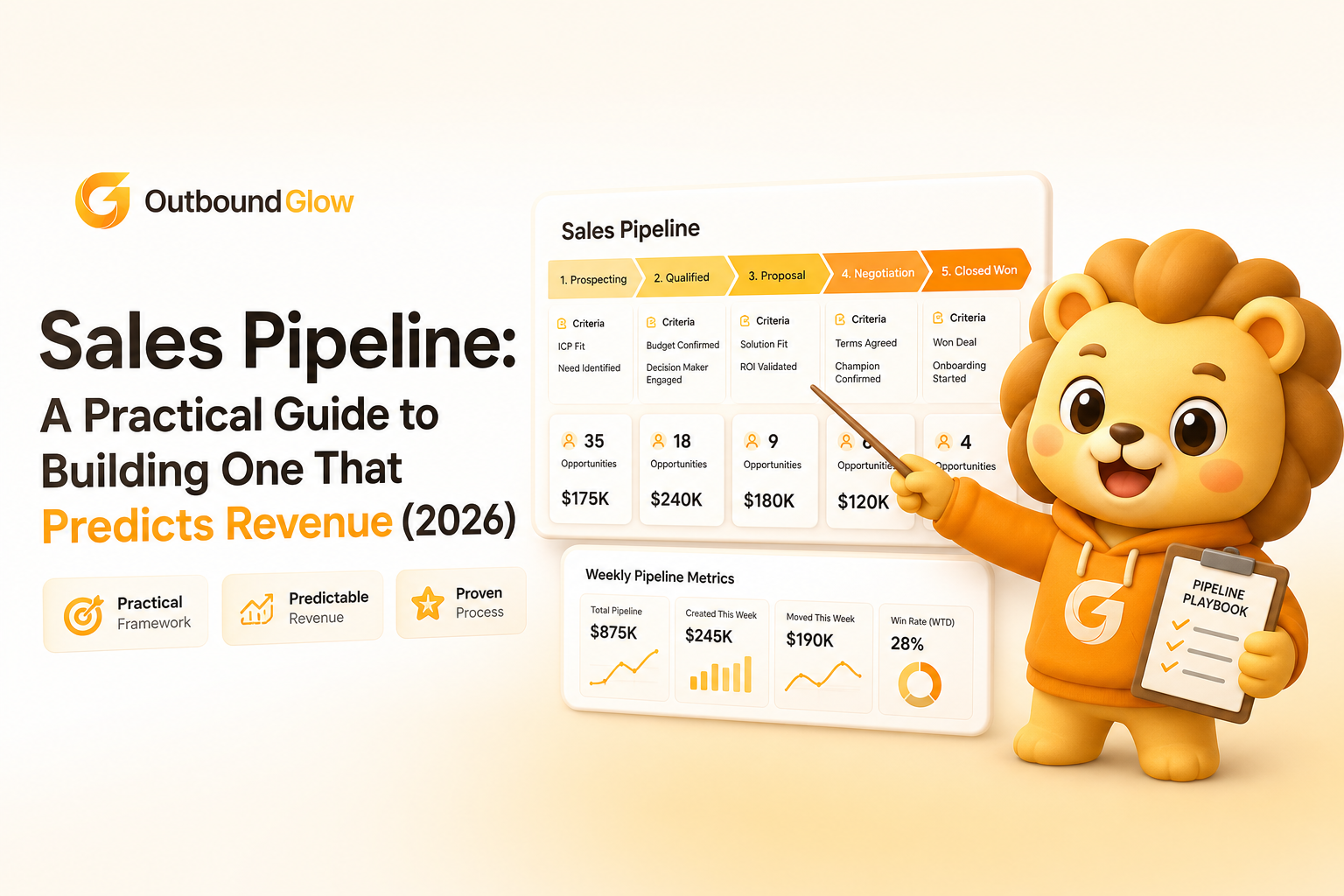
A simple sales pipeline template with stages, criteria, and weekly metrics.
Why a Sales Pipeline Matters (With Benchmarks)
1) Forecasting gets easier when you measure the middle, not just the end
Most teams look at closed-won and closed-lost, then wonder why forecasting is unreliable. A pipeline forces you to measure the steps in between: stage conversion and speed. That is what makes revenue more predictable.
2) Bad data is expensive because it wastes selling time
If your pipeline is full of deals that should not be there, reps spend time following up with people who will never buy. Many outbound teams also lose time and results due to poor contact data quality. For example, Instantly reports that bounce rate should be kept low (commonly cited guidance is under ~3%) to protect sending reputation and deliverability.
Actionable takeaway: Treat “pipeline cleanliness” as a weekly habit, not a quarterly cleanup project. If you do outbound, start by ensuring you are contacting real people at real inboxes before you even debate messaging.
Phase 1: Define Stages That Match Buyer Actions
The fastest way to break a sales pipeline is to base stages on what the seller does (like “sent email”) instead of what the buyer does (like “confirmed meeting”). Buyer-action stages reduce ambiguity and make coaching easier.
A simple 5-stage sales pipeline template (for most B2B)
Qualified: The lead matches your target customer and there is a real use case.
Meeting set: A meeting is booked with the right stakeholder.
Discovery complete: You confirmed problem, impact, decision process, and timeline.
Proposal sent: Buyer received pricing and scope and confirmed next step.
Closed: Won or lost with a documented reason.
Decision table: should you add more stages?
Signal | Keep stages simple | Add a stage |
|---|---|---|
Deal cycle length | Under 30 days | Over 30-45 days |
Number of stakeholders | 1-2 people | 3+ people or committee |
Sales motion | Transactional, low friction | Requires security, procurement, legal |
Team maturity | New team, inconsistent CRM use | Consistent logging and clear process |
Actionable takeaway: Start with 5 stages. Only add a stage if it changes what you do next (not just how you label the deal).
Next step: Create a one-page “stage definitions” doc and link it inside your CRM. Then expand with a deeper guide on stage design (cluster article).
Phase 2: Set Entry and Exit Criteria (So Stages Mean Something)
Stages are not real unless you can say exactly what qualifies a deal to enter and what must happen to exit. This is where most pipelines fail: deals drift forward based on optimism.
Use this entry/exit criteria checklist per stage
Required fields: What must be filled in (company size, use case, next step date, etc.).
Buyer confirmation: What did the buyer agree to (meeting, timeline, evaluation step).
Evidence: What proof exists (calendar invite, email confirmation, proposal link).
Next action: What is the single next step and date.
Concrete example: “Qualified” stage criteria
Enter Qualified when: ICP match is confirmed + a specific problem is stated in the lead’s words.
Exit Qualified when: a meeting is booked with an agenda and at least one decision maker is invited.
If you are generating pipeline from outbound, messaging quality affects whether you can reach “meeting set” consistently. A practical way to improve that step is to systematize cold email personalization so each prospect sees a relevant reason to talk.
Actionable takeaway: Pick one stage (usually “Qualified” or “Discovery complete”) and write entry/exit criteria today. Then enforce it in your next pipeline review.
Next step: Write criteria for every stage and add “required fields” rules in your CRM (cluster article).
Phase 3: Measure Pipeline Health With 6 Core Metrics
A sales pipeline becomes a forecasting tool when you track a small set of metrics consistently. You do not need complicated models. You need a few numbers you can trust.
The 6 metrics that make a pipeline predictable
Pipeline coverage: Pipeline value for a period divided by quota for that period. Many teams aim for ~3x coverage, but the right number depends on win rate.
Win rate: Closed-won deals divided by total closed deals.
Stage conversion rate: Percent of deals moving from one stage to the next.
Time in stage: Median days a deal stays in each stage.
Deal slippage: Deals that move to a later close date compared to what was forecast.
Next-step hygiene: Percent of open deals with a dated next step.
Benchmarking without making up numbers
Public benchmarks vary widely by industry and deal size. If you do not have trustworthy external benchmarks for your niche, create your own baseline:
Take the last 20 closed deals.
Calculate win rate, time-to-close, and stage conversion.
Use those as your “current reality” benchmarks for the next 30 days.
Actionable takeaway: If you track only one thing weekly, track time in stage. It exposes bottlenecks faster than revenue totals.
Next step: Build a simple pipeline health dashboard with these 6 metrics (cluster article).
Phase 4: Run a Weekly Pipeline Review That Actually Improves Outcomes
Most pipeline meetings fail because they become status updates. A good review is a decision-making session: what to fix, what to drop, and what to push forward.
A 30-minute weekly pipeline review agenda (for small teams)
5 minutes: Look at stage distribution and identify the biggest pile-up (one stage only).
10 minutes: Review “stuck deals” list (deals with no movement in X days, where X equals your normal time-in-stage).
10 minutes: Pick 3 deals to unblock with specific actions (introductions, revised proposal, new stakeholder).
5 minutes: Clean-up decisions: move to “closed-lost” or “nurture” with a reason.
Stuck-deal rules (so the team is consistent)
If a deal has no next step date, it is not real. Add a next step or close it.
If a deal is 2x normal time-in-stage, it needs escalation: new angle, new stakeholder, or close out.
If a deal is waiting on the buyer, set a specific follow-up date and a “breakup” message date.
Actionable takeaway: Your pipeline review should end with a short list of decisions, not a long list of updates.
Next step: Create a “stuck deals” view in your CRM and use it every Monday (cluster article).
Sales Pipeline Checklist (Copy and Use)
Use this checklist to build or rebuild a sales pipeline in one afternoon.
Pipeline setup
Define 5-7 stages based on buyer actions.
Write 1-sentence entry and exit criteria for each stage.
Set required fields per stage (at minimum: deal amount, close date, next step date, primary contact).
Create a “stuck deals” rule based on time in stage.
Pipeline measurement
Track win rate monthly.
Track stage conversion monthly.
Track median time in stage weekly.
Track pipeline coverage weekly.
Track next-step hygiene weekly (target: 90%+ of open deals have a dated next step).
Pipeline operating rhythm
Run a 30-minute weekly pipeline review with a fixed agenda.
Close out dead deals weekly with a reason code.
Review one stage bottleneck per week and test one improvement.
Actionable takeaway: The fastest improvement is usually not “more leads.” It is removing fake deals and tightening stage criteria so the pipeline reflects reality.
FAQ
What is the difference between a sales pipeline and a sales process?
A sales process is the set of steps your team follows. A sales pipeline is the live view of deals moving through those steps. The process is the playbook; the pipeline is the scoreboard.
How many stages should a sales pipeline have?
Most small B2B teams do well with 5 to 7 stages. Fewer stages reduce confusion; more stages only help if they change what you do next and improve forecasting accuracy.
What should I do with deals that are stuck in the pipeline?
First, check if there is a dated next step. If not, set one or close the deal out. If the deal has been in a stage longer than 2x your normal time-in-stage, escalate by involving a new stakeholder, changing the offer, or moving it to nurture.
How do I know if my pipeline is “healthy”?
A healthy pipeline has clear stage criteria, high next-step hygiene (most open deals have a dated next step), stable stage conversion rates, and enough coverage to hit your target based on your win rate. If one stage grows while conversions drop, that is your bottleneck.
If you want to fill your sales pipeline faster from outbound without spending hours on manual prospecting and rewriting emails, see how Outbound Glow can help automate lead sourcing and outreach setup. Start with a small test and measure meetings booked per week.

Written by Leah Nguyen
Read Next
View all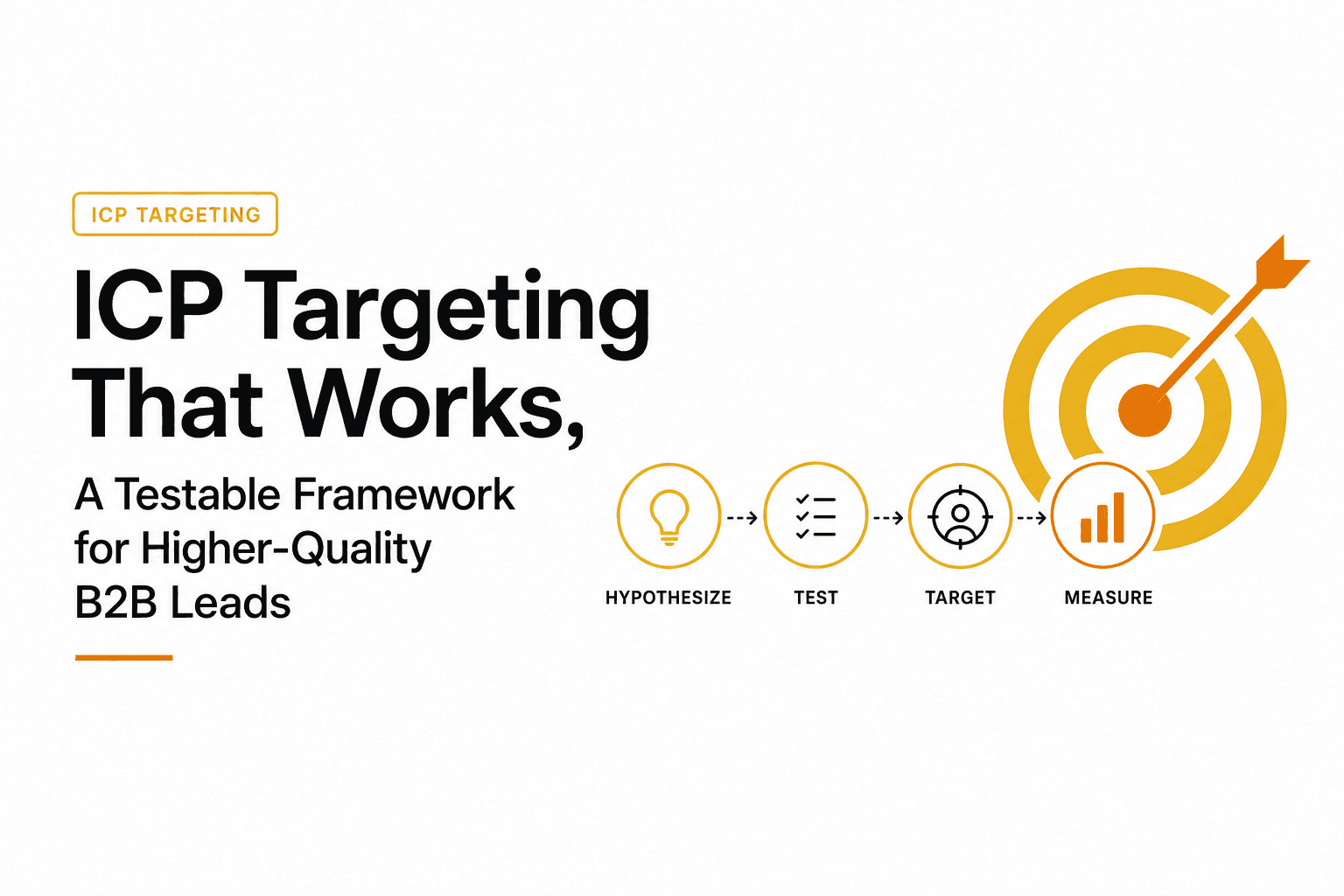
ICP Targeting That Works, A Testable Framework for Higher-Quality B2B Leads
Learn icp targeting with a testable framework: hypotheses, industry rules, signals, scorecards, and outbound workflow to improve replies and pipeline quality.

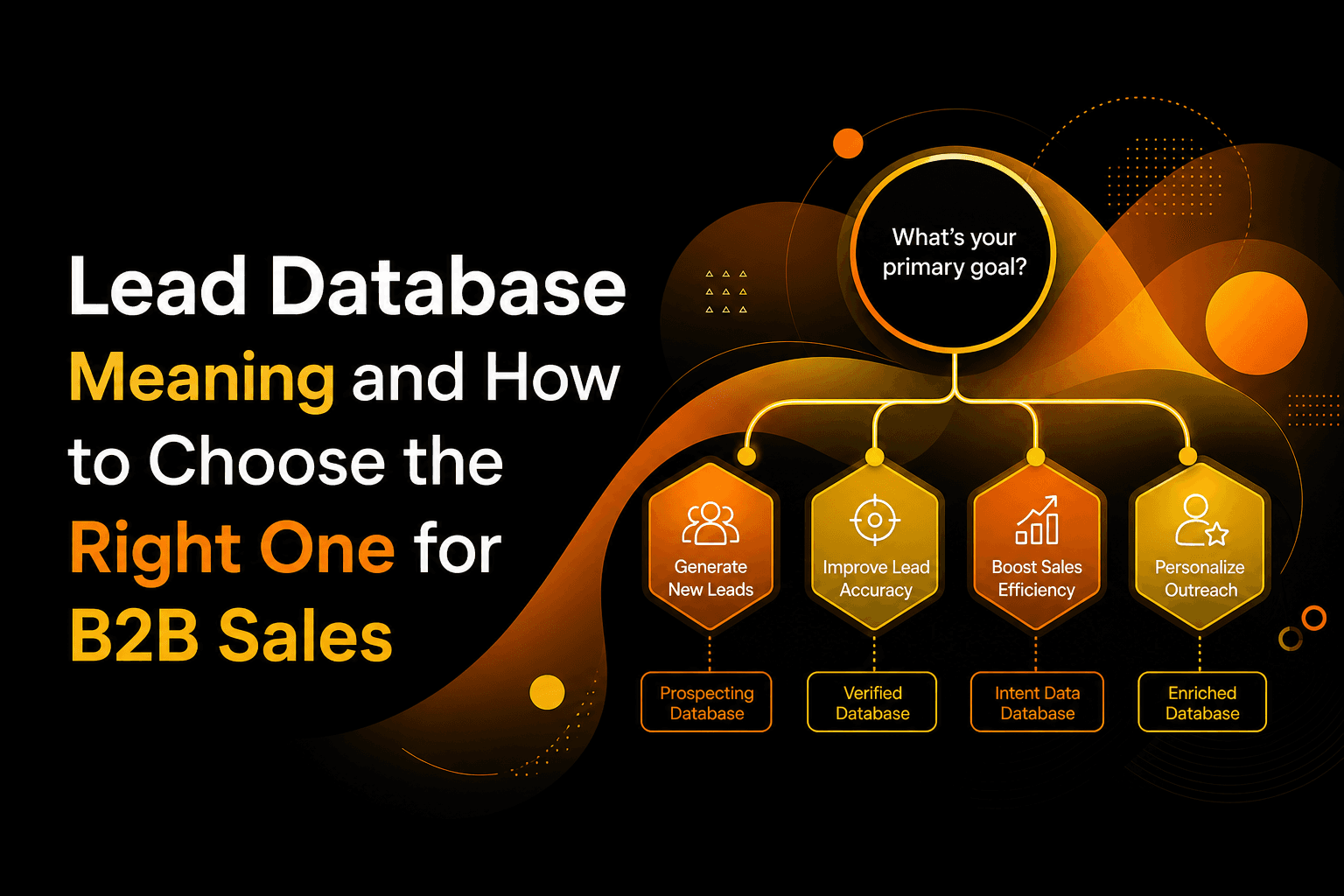
Lead Database Meaning and How to Choose the Right One for B2B Sales
Learn what a lead database means, how to evaluate B2B data quality fast, and how to shortlist providers with a practical scorecard.
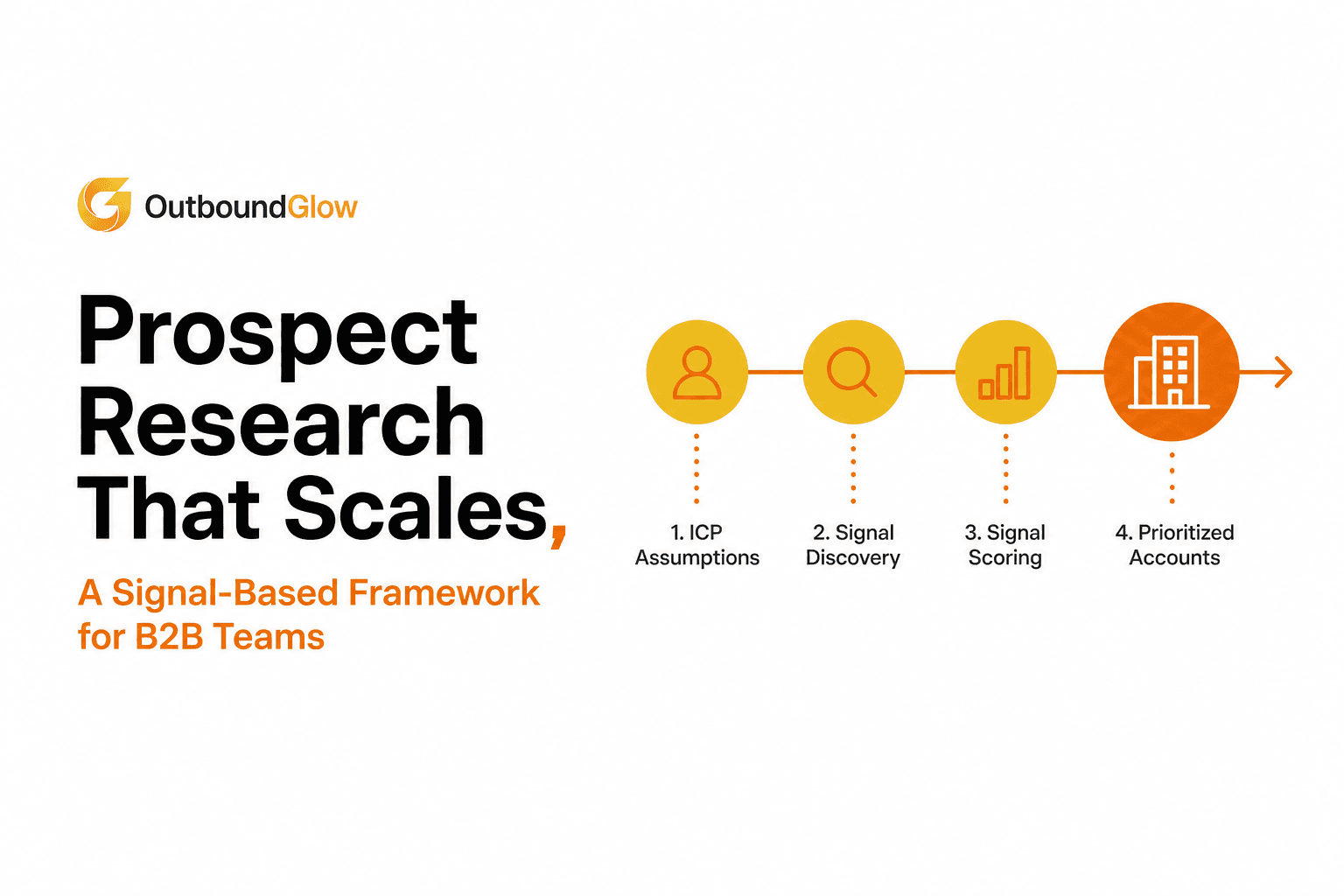
Prospect Research That Scales, A Signal-Based Framework for B2B Teams
Learn prospect research that scales using buying signals, scoring, and messaging inputs to prioritize accounts and personalize outreach without rabbit holes.