
Smartlead Alternative Guide Ranked Options and Real World Pricing Scenarios
Decision-ready smartlead alternative guide with ranked options, normalized pricing scenarios, AI matrix, and a switch checklist for cold email teams.

If you are searching for a smartlead alternative, you are usually not looking for “another sequencer”. You want a safer deliverability setup, clearer costs at your sending volume, better multi-inbox operations, or AI that actually reduces manual work without hurting domain health. This guide helps you shortlist options using a transparent rubric, compare real-world total cost, and switch with minimal disruption.
- Use switch triggers (deliverability ops, scale, agency workspaces, AI personalization, integrations) to narrow to the right tool category before comparing brands.
- Rank alternatives with a scoring rubric, then validate with normalized monthly total cost scenarios for solo, SDR team, and agency.
- AI matters most when it improves personalization and safety controls (auto-stop, bounce protection, reply handling), not when it only generates generic copy.

What to replace Smartlead with based on why you are switching
Start with the reason you are switching. The fastest way to pick the wrong smartlead alternative is to compare feature checklists without mapping them to your operational bottleneck. Use the trigger-to-category map below, then only evaluate tools in the categories that solve your exact constraint.
Trigger map and best-fit tool category
- Deliverability anxiety (bounces, spam, domain reputation swings) → deliverability-first outreach platforms with guardrails, verification, and warmup options.
- Need to scale volume across many inboxes → multi-inbox senders with strong throttling, scheduling, and monitoring.
- Agency work (multiple clients, permissions, workspaces) → agency-ready systems with client separation, reporting, and access control.
- Personalization is too manual → AI-assisted personalization that uses prospect context and enforces safety constraints.
- Reporting is not tying to outcomes → systems with pipeline-style status tracking and clearer campaign analytics. If you want a primer on metrics that matter, see email analytics.
Quick shortlist framework (5 questions)
- How many sending inboxes will you run in 90 days? (1 to 3, 4 to 20, 20+)
- Do you need client workspaces? (yes for agency, usually no for in-house)
- What is your acceptable bounce ceiling? Many teams treat 2% as a red line; if you are near it, prioritize verification and guardrails.
- Will you disable open tracking? Some teams do for cold email testing to reduce tracking-related risk; your tool should not break reporting if you do. For deliverability fundamentals, read email deliverability.
- Where do leads come from? CSV, API, Apollo, LinkedIn, enrichment tools. Integration friction is a hidden cost.
Smartlead alternatives ranked with a transparent scoring rubric
Below is a rubric you can reuse in procurement. It avoids vague “best tool” claims by scoring the capabilities that affect outcomes: deliverability operations, scale, AI usefulness, agency management, UX and support, and integrations.
The scoring rubric (0 to 5 per category)
- Deliverability ops (0 to 5): DNS checks, bounce controls, safe sending limits, warmup options, alerting, auto-pause, and anti-over-emailing rules.
- Scale and throughput (0 to 5): multi-inbox management, throttling, timezone sending, reliability at volume.
- AI that saves time (0 to 5): prospect-aware personalization, sequence generation, guardrails, reply intent handling.
- Agency management (0 to 5): workspaces, permissions, client reporting.
- UX and support (0 to 5): onboarding speed, workflow clarity, docs, responsiveness.
- Integrations (0 to 5): CRM, lead sources, API, webhooks.
Ranked snapshot (example scoring)
Use this as a starting point, then adjust weights. For example, agencies often weight workspaces and permissions higher, while founders weight AI time savings and deliverability.
- Instantly: strong for high-volume sending and straightforward sequencing; verify how you will handle deliverability monitoring and client separation if you need it.
- Lemlist: often chosen when teams want multi-channel touches and templates; validate deliverability controls and costs at your inbox count.
- Mailshake: simpler operations and training for small teams; check how it fits your scale and inbox management needs.
- Apollo (outreach features): convenient if your lead sourcing and outreach live together; confirm deliverability guardrails and sending flexibility for cold email.
- HubSpot sequences (as part of CRM): best when outbound is tightly tied to CRM workflows; usually less specialized for cold email deliverability and multi-inbox scale.
Tip: if your main problem is deliverability operations, prioritize tools that make it easy to monitor SPF, DKIM, and DMARC health and enforce safe daily sending limits. If you need a refresher on warmup tradeoffs, see email warmup.
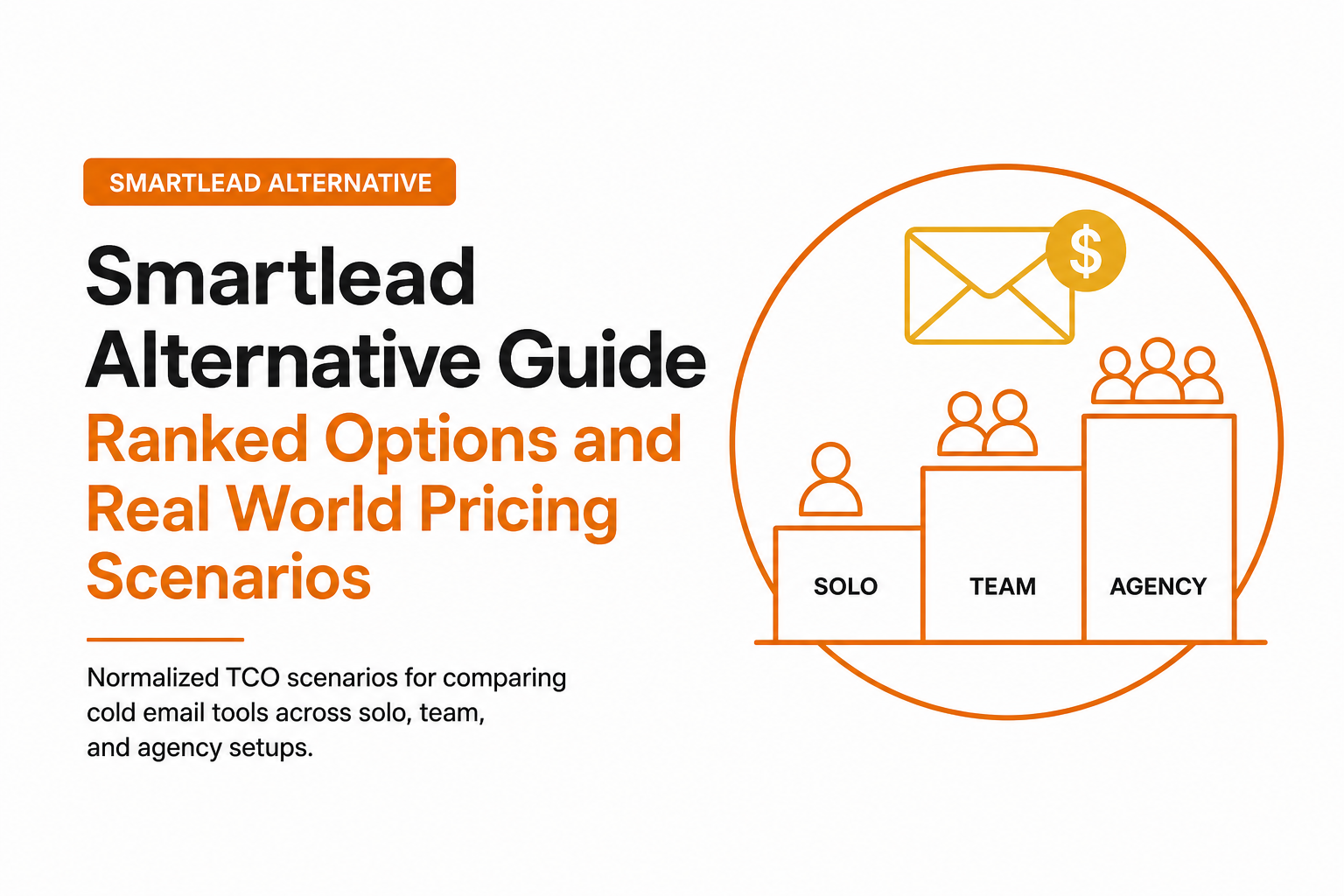
Pricing that actually compares a normalized TCO for solo, team, and agency
List prices rarely compare cleanly because vendors charge differently for seats, inboxes, and add-ons. Instead, normalize total cost of ownership (TCO) using assumptions that match how cold email teams actually operate.
Normalization assumptions (edit these to fit your reality)
- Solo founder: 2 inboxes, 1 seat, 1 workspace, 2,000 to 5,000 sends per month.
- SDR team: 10 inboxes, 3 seats, 1 workspace, 20,000 to 60,000 sends per month.
- Agency: 30 inboxes, 5 seats, 5 client workspaces, 100,000+ sends per month.
- Common add-ons: email verification, warmup, extra workspaces, and sometimes deliverability monitoring.
TCO checklist (what to include so you do not undercount)
- Sending infrastructure: inboxes, SMTP costs if applicable.
- Verification: per-contact or monthly plans. This is often the difference between a stable 0.5% to 1% bounce rate and a campaign that gets paused.
- Warmup and reputation protection: optional, but many teams pay for it early.
- Seats and permissions: especially for agencies.
- Opportunity cost: hours per week spent on deliverability checks, lead research, and rewriting sequences.
Benchmark for the opportunity cost line item: many small teams report spending 8 to 12 hours per week across deliverability checks, list cleanup, and follow-up management. If your smartlead alternative reduces that by even 5 hours per week, the labor savings can exceed the software delta.
Smartlead AI vs alternatives what is real value vs gimmicks
AI is useful in cold email only when it improves outcomes without increasing risk. A practical way to evaluate a smartlead alternative is to use an AI capability matrix focused on personalization quality, safety controls, and reply handling.
AI capability matrix (what to test in a live pilot)
- Prospect-grounded personalization: Does it reference role, industry, company context, and a plausible trigger without hallucinating?
- Multi-step sequence coherence: Step 2 and 3 should add a new angle, not restate Step 1.
- Safety controls: Can you enforce “send only to verified contacts”, cap daily volume, and stop follow-ups when someone replies?
- Reply handling: Can it classify replies (positive, objection, out-of-office) and prevent accidental follow-ups?
- Testing workflow: Can you run a small batch test without rebuilding the campaign?
A simple 30-minute AI evaluation script
- Pick 20 leads across 3 industries and 3 roles.
- Generate first lines and Step 1 emails.
- Manually score each email: Specific (0 to 2), Accurate (0 to 2), Non-creepy (0 to 1). Target 4 out of 5 average.
- Check whether the system blocks unverified emails and whether it can auto-stop on replies.
- Send a pilot with low volume (30 to 50 emails per day per new inbox is a common starting point) and monitor bounces and spam complaints.
Smartlead vs Instantly the decision breakdown and migration checklist
Instantly is one of the most common comparisons when evaluating a smartlead alternative. The right choice depends less on “more features” and more on how you run operations: inbox management, safety controls, and how much of the workflow you want automated versus manually tuned.
Operational differences to validate
- Inboxes and throttling: How easy is it to set safe daily sending limits and schedule by recipient timezone?
- Follow-up safety: Do you have reliable auto-stop rules so the sequence halts immediately when a prospect replies?
- List hygiene: Can you enforce verified-only sending and automatically block bad emails?
- Visibility: Are alerts and health indicators clear when bounce or unsubscribe rates spike?
Step-by-step migration checklist (no hype, just risk control)
- Inventory: export current sequences, suppression lists, and active campaign settings.
- Domain safety first: confirm SPF, DKIM, and DMARC are correct before importing inboxes. If you need a reference, use Google’s guidance on email authentication basics: Set up SPF and DKIM.
- Warm start: move 1 to 2 inboxes first, keep daily volume low, and watch bounce rate for 72 hours.
- Rebuild sequences with timing: keep delays at 2 to 3 days between steps, and use weekday schedules. Many teams see best engagement Tuesday to Thursday mornings in the recipient’s local timezone.
- Turn on verification gating: only send to verified contacts; block risky addresses.
- Configure auto-stop rules: stop on reply, stop on bounce, and stop on unsubscribe.
- Pilot and compare: run 100 leads through both systems with the same ICP and offer. Compare reply rate and negative signals (bounces, spam complaints).
Why Outbound Glow is the smartlead alternative for AI-run outbound at scale
If your goal is not just to send sequences, but to run outbound with less manual work while protecting domain health, Outbound Glow is a strong smartlead alternative to evaluate. The fit is best when you want AI to help with lead targeting and personalization while keeping strict safety controls around deliverability.
How it maps to the rubric (what to look for in a demo)
- Deliverability operations: look for DNS health checks, safe sending limits, and campaign guardrails that can auto-pause when bounce, spam, or unsubscribe signals exceed thresholds.
- Automation that reduces busywork: evaluate whether the AI can generate a multi-step sequence quickly, then personalize per prospect context without sounding templated.
- Sequence safety: confirm you can auto-stop follow-ups immediately when a prospect replies, and that you can enforce verified-only sending so bad emails are blocked.
Fast-start implementation path (founder-friendly)
- Protect: connect your mailbox, verify SPF, DKIM, and DMARC, and start with a daily sending limit around 30 to 50 emails per day for new inboxes.
- Find leads: import via CSV or API, or connect lead sources. Keep the first batch to 100 leads so you can iterate fast.
- Create and launch: build a 3-step sequence with 2 to 3 day spacing, run weekdays 9:00 AM to 6:00 PM in the recipient’s local timezone.
- Personalize and track: use AI personalization per profile, then scale only after performance clears basic thresholds (for example, many teams wait for 35%+ opens and 2%+ replies before increasing volume).
If you are also evaluating how to choose a system by industry and workflow, use this guide to pick the right email outreach platform before you commit to a migration.
| Decision factor | What to verify in any smartlead alternative | What “good” looks like in practice |
|---|---|---|
| Deliverability guardrails | Verified-only sending, bounce monitoring, auto-pause, DNS health visibility | Bounce rate stays under 1% on clean lists, campaigns pause before domain damage |
| Scaling operations | Multi-inbox controls, daily caps, timezone sending, reliable scheduling | You can add inboxes without rewriting processes or losing reporting clarity |
| AI usefulness | Prospect-grounded personalization, coherent sequences, safe automation | Personalization scores 4/5 in a 20-lead test and reduces editing time materially |
| Agency readiness | Client separation, permissions, reporting per workspace | Client data does not mix, and reporting is exportable for stakeholders |
| Analytics that matter | Reply and pipeline status tracking, negative signal tracking | You can diagnose which step causes bounces or unsubscribes and fix it fast |
FAQ about choosing a smartlead alternative
How do I pick the right smartlead alternative in one day?
Run a 100-lead pilot with two candidates. Keep the same ICP, offer, and sequence timing. Compare reply rate and negative signals (bounces, spam complaints, unsubscribes). Choose the tool that maintains safer deliverability signals while keeping your workflow simpler.
What metrics should I watch during a switch?
Watch bounce rate (aim under 1% on verified lists), unsubscribe rate, spam complaints, and reply rate by step. Also track operational metrics like time spent on list cleaning and deliverability checks.
Should I disable open tracking for cold email?
Some teams disable open tracking to reduce tracking-related deliverability risk, then rely more on replies and click signals. The practical approach is to A/B test with a small batch and keep everything else constant.
What is the most common migration mistake?
Scaling volume too fast on new or recently moved inboxes. Start with conservative daily limits, enforce verified-only sending, and use auto-stop rules so follow-ups halt on replies, bounces, or unsubscribes.
If you want a smartlead alternative that emphasizes AI-run outbound plus domain-health safeguards, book a demo with Outbound Glow, review Outbound Glow pricing, and use the rubric above as your evaluation checklist. You will leave with a clear pilot plan, not just a feature tour.

Written by Leah Nguyen
Read Next
View all
Instantly Alternative Guide - Pricing, Deliverability, and Best Fit by Use Case
Compare an instantly alternative using a deliverability rubric, true free tiers, and real total cost across solo, team, and agency setups.


Cold Outreach Automation That Actually Scales, The Analytics Framework by Industry
Cold outreach automation that scales needs the right metrics. Use this industry scorecard to track deliverability, qualified replies, and pipeline.
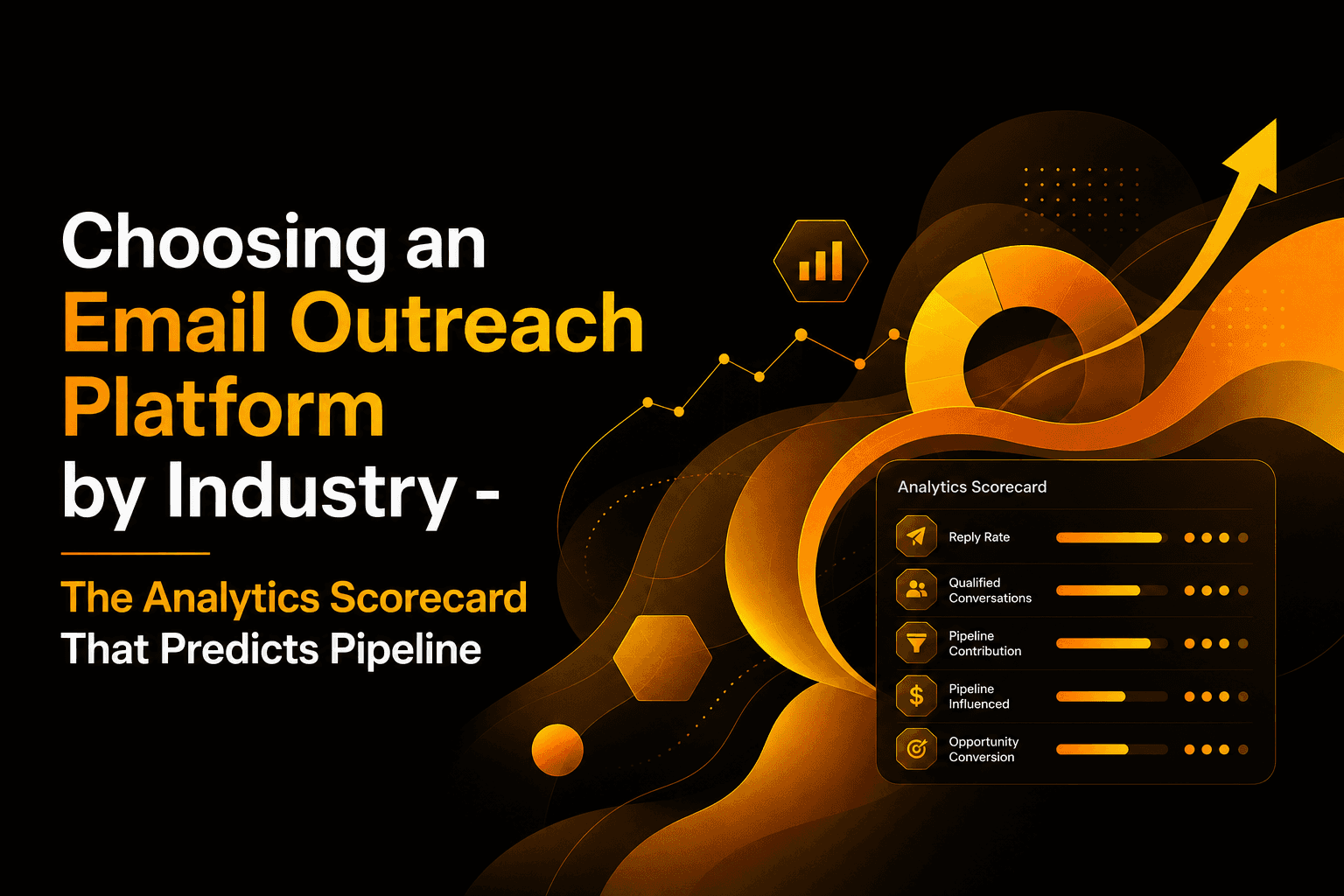
Choosing an Email Outreach Platform by Industry - The Analytics Scorecard That Predicts Pipeline
Choose an email outreach platform by industry using an analytics scorecard that predicts meetings, pipeline velocity, and deliverability health.