
Founder led outbound: Stop waiting for leads to find you
A practical playbook for founder led outbound that scales: package your voice, target the right segments, and measure traction before hiring.

Most founders wait. They wait for referrals, for word of mouth, for inbound to kick in. But the pipeline you need rarely finds you on its own. Founder led outbound works because prospects trust the person closest to the problem, but it breaks the moment the founder becomes the only person who can write, target, and send.
Key takeaways
Validate founder led outbound fit with a simple 3-signal checklist before you scale volume.
Codify your founder voice into reusable components (POV, proof, offer, constraints) so others can execute consistently.
Use light personalization rules and segment-level relevance to get replies without spending hours per account.
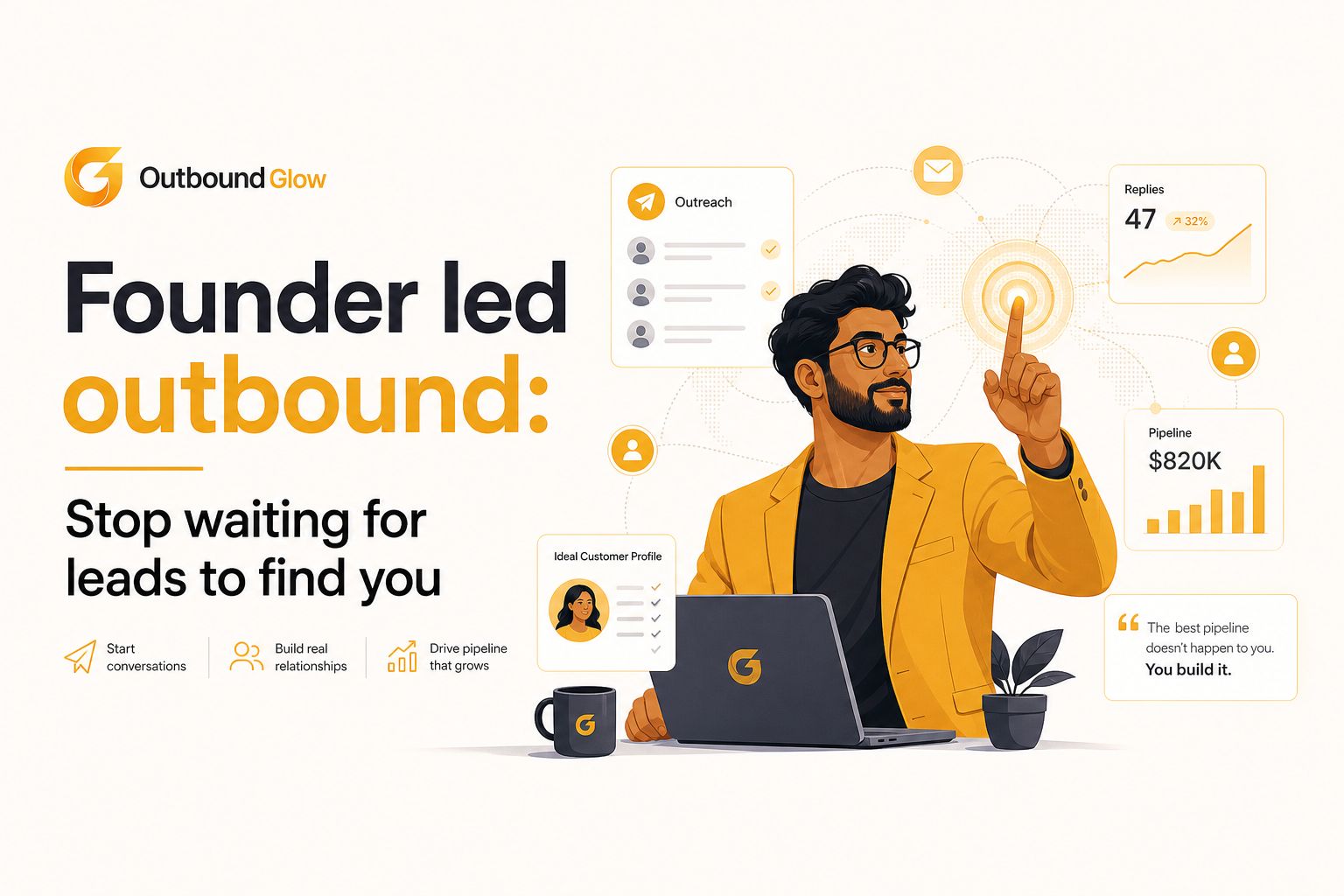
A simple system for turning founder credibility into a repeatable outbound process.
The founder context: why you are getting replies (and why it stops)
If you are a founder doing outbound yourself, you are usually winning on a combination of (1) credibility, (2) speed of learning, and (3) tight problem definition. Prospects feel you are not “just sales,” and your messages often carry sharper insight because you built the product and talk to customers.
Common founder constraints that quietly kill consistency
Message drift: every week your pitch changes based on the last call, so results are impossible to compare.
List quality debt: you pull leads from wherever is fastest, and deliverability suffers when targeting is sloppy.
Over-personalization: you spend 15 minutes researching each prospect, then you cannot send enough to learn.
No definition of “working”: you scale because you “feel” it is working, not because metrics crossed a threshold.
What scalable founder-led outbound should feel like
Scalable founder led outbound is not "the founder sends forever." It is "the founder stops waiting, packages their insight once, and lets the system execute repeatedly."
When founder led outbound works (and when it backfires)
Founder led outbound tends to outperform early because it compresses trust. But it also has predictable failure modes. Use the checklist below to decide whether you should lean in, narrow, or pause and fix foundations first.
A 3-signal fit checklist
High trust requirement: the buyer is skeptical, risk is real, or you are displacing a status quo. If the buyer needs to believe the “why now,” founder led outbound helps.
Clear ICP pain with a measurable outcome: you can name a painful metric (time wasted, revenue leakage, compliance risk) and the outcome you drive.
Short learning loop: you can run 2 to 4 iterations per month, not 2 to 4 per quarter. Outbound is a feedback engine.
When it backfires (failure modes you can diagnose)
Too many segments at once: you pitch “anyone who sells B2B,” so the message becomes generic.
Weak offer: you ask for “15 minutes to learn about your needs” instead of offering a specific outcome.
Deliverability and list hygiene are ignored: your open rate becomes unreliable, bounces rise, and replies drop.
You scale volume before relevance: more sends amplify the wrong message.
What to validate before scaling volume
Use these benchmarks as “go/no-go” gates for scaling. They are not universal, but they are practical thresholds used by many outbound operators.
Bounce rate: keep it low and stable. If you are unsure what counts as “high,” review bounce rate definition and set a hard stop rule.
Positive reply rate: aim for a consistent baseline before scaling. If you get occasional spikes but no repeatability, you have a message or segment mismatch.
Meeting conversion: track what percent of positive replies become meetings and qualified opportunities. If meetings are high but opportunities are low, your targeting is off.
Also, treat open rate as a directional signal, not a truth source. Apple Mail Privacy Protection and other changes have made opens noisy. For context, see standard email open rates.
Packaging the founder voice into a repeatable cold email system
The fastest way to scale founder led outbound is to stop treating emails as one-off writing and start treating them as assembled components. Your team should be able to build a high-quality email by selecting the right components for a segment, not by reinventing the story.
The Founder Voice Canvas (copy this into a doc)
Create a one-page “Founder Voice Canvas” with these fields. This is the artifact that makes your voice transferable.
POV: what you believe that your buyers might not. Example: “Most outbound fails because teams optimize copy before they fix deliverability and list fit.”
Specific proof: 3 to 5 proof points with numbers and context. Example: “We reduced time spent on manual lead research by 3 hours per week for a 4-person team.”
Offer: the smallest next step with a clear outcome. Example: “I will share a 10-minute teardown of your current outbound sequence and point out the first fix that will likely increase replies.”
Constraints: who it is not for. Example: “Not a fit if you only sell to consumers or you need a 12-month procurement cycle.”
Customer language: 10 phrases you have heard on calls. These become subject lines and first lines.
Turn the canvas into reusable message components
Build a small library. Keep it tight: 3 variants per component is enough to start.
First line templates (segment-aware): “Noticed you lead {function} at {company}, and you are hiring for {role}. Usually that means {pain} is now urgent.”
Problem statements (one sentence): “Teams like yours often lose weeks to manual outreach ops before they learn what messaging actually works.”
Proof snippets (one sentence): “One founder we worked with reclaimed about 9.5 hours per week by automating deliverability checks, lead vetting, and sequence drafting.”
Offer CTAs (two options): “Worth a 12-minute call?” or “If you prefer, I can send the teardown as a short Loom.”
A concrete 4-email sequence structure you can reuse
Email 1: POV + pain + proof + simple CTA.
Email 2 (Day 3): “Am I off?” plus one clarifying question that helps you segment replies.
Email 3 (Day 7): a small asset or framework (for example, your targeting checklist) and a softer CTA.
Email 4 (Day 12): break-up email that preserves brand: “Should I close the loop?” plus a single option.
If you need a refresher on the broader mechanics of sequencing and list safety, this guide on cold outreach is a solid reference point.
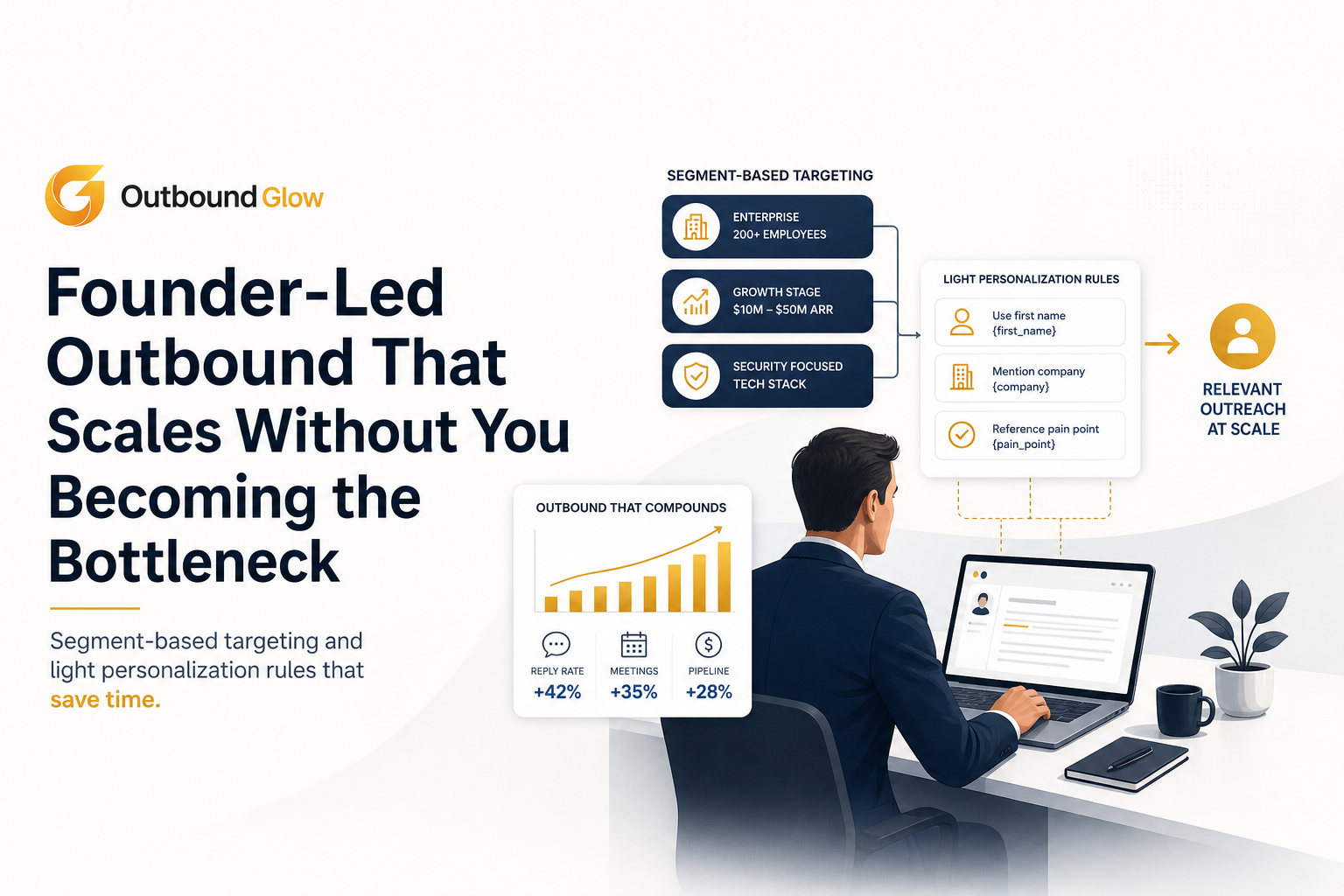
Segment-based targeting and light personalization rules that save time.
Founder-led outbound targeting and personalization without burning time
Founders often assume the only way to keep reply rates high is deep personalization. In reality, most wins come from better segmentation and consistent relevance. Founder led outbound scales when personalization is rule-based, not artisanal.
Segment selection: the 2x2 that prevents “everyone” targeting
Pick segments using two axes: pain intensity and ability to buy quickly. Score each from 1 to 5, then start with the top two segments only.
Pain intensity signals: hiring for sales roles, recent funding, new GTM leader, expanding to a new market, public revenue targets.
Ability to buy quickly signals: founder-led or small exec team, clear budget owner, short procurement, existing tooling mismatch.
Rule: if you cannot write a segment-specific problem statement in one sentence, you do not have a segment yet.
Light personalization rules that scale
Use “light personalization” that takes seconds, not minutes. Three rules are enough for most founder led outbound programs:
Role-based relevance: tailor the pain to the role (CEO cares about pipeline predictability, Head of Sales cares about meetings, Ops cares about process and deliverability).
One public signal: pick a single signal per prospect (hiring, funding, product launch) and reference it briefly.
One constraint: state who you are not for. This increases trust and reduces low-quality replies.
Avoid the over-personalization trap
Over-personalization usually fails in two ways: it is slow, and it tempts you into irrelevant compliments. If your first line can be swapped between two companies and still be true, it is too generic. If it takes more than 60 to 90 seconds to produce, it is too expensive.
Define what “working” looks like before you scale
Founder led outbound should be treated like a product experiment with clear success criteria. Track these three layers:
Delivery health: bounce, spam complaints, unsubscribes. Set auto-stop thresholds.
Conversation health: positive replies and “not now” replies. “Not now” can still mean strong targeting.
Revenue health: meetings to qualified opportunities to closed revenue. Map this to your sales pipeline so you do not confuse activity with progress.
Stage | Metric to track | What good looks like (practical) | What to change if it is bad |
|---|---|---|---|
List quality | Bounce rate | Stable and low over time | Tighten filters, verify emails, remove risky domains |
Message relevance | Positive reply rate | Consistent across 2-3 sends per segment | Narrow segment, rewrite problem statement, adjust offer |
Offer strength | Reply-to-meeting conversion | Improves after you clarify outcome and next step | Make CTA smaller, add proof, reduce friction |
Qualification | Meeting-to-opportunity conversion | Rises when targeting matches buyer and timing | Change titles targeted, add disqualifiers, refine triggers |
FAQ
How many segments should I run at once in founder led outbound?
Start with one, add a second only after you can explain why the first is working. If you cannot write a one-sentence problem statement and a one-sentence proof for a segment, it is not ready.
Should the founder be the sender forever?
No. The founder should own the narrative, proof, and segmentation decisions. Execution can be delegated once your voice is codified and you have clear stop rules for deliverability and performance.
How much personalization is enough?
Enough to show relevance, not enough to slow learning. Role-based relevance plus one public signal is usually sufficient. If personalization takes longer than 60 to 90 seconds per lead, it will cap volume and experimentation.
What is the fastest way to protect deliverability while testing?
Warm up mailboxes, verify SPF/DKIM/DMARC, keep daily sending limits conservative, and pause sequences when bounce or complaint signals rise. For standards and background, Google’s email sender guidelines are a useful reference: SPF, DKIM, and DMARC.
If you are ready to stop waiting for leads to find you, Outbound Glow is built to help you package your voice into repeatable sequences, personalize at scale, and protect domain health with guardrails so you can focus on learning and closing, not sending.

Written by Leah Nguyen
Read Next
View all
Smartlead Alternative Guide Ranked Options and Real World Pricing Scenarios
Decision-ready smartlead alternative guide with ranked options, normalized pricing scenarios, AI matrix, and a switch checklist for cold email teams.

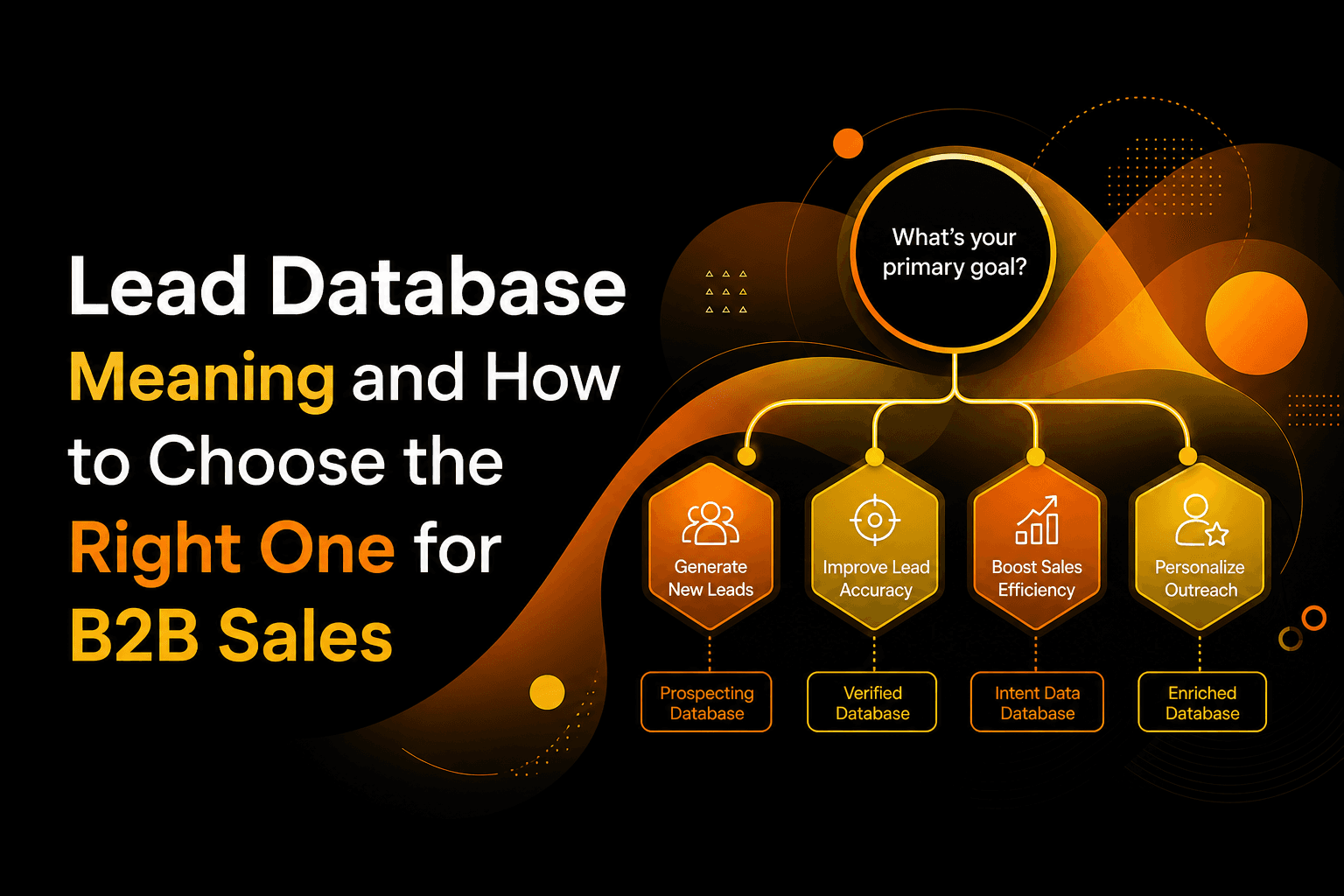
Lead Database Meaning and How to Choose the Right One for B2B Sales
Learn what a lead database means, how to evaluate B2B data quality fast, and how to shortlist providers with a practical scorecard.
Email Deliverability for Cold Email Explained in Plain English
Learn email deliverability for cold email with a simple stack: identity, list quality, content, and sending behavior plus quick fixes.